Choosing the right recessed-light trim affects more than appearance. It changes glare, ceiling brightness, visual comfort, and even how spacious a room feels. Homeowners, designers, and electricians often compare baffle and reflector trims because both can use the same housing. Their performance, however, is noticeably different.
This guide explains how to choose between baffle and reflector trims using practical lighting principles. Baffle trims contain ribbed grooves that absorb stray light and soften the beam. They work well in bedrooms, living rooms, media spaces, and other areas where reduced glare matters. Reflector trims use a smooth, reflective surface to direct more light downward. They can suit kitchens, retail displays, workshops, and ceilings that need stronger visual emphasis.
The decision should begin with the room’s purpose. A dark baffle may feel comfortable above a sofa, but it can reduce perceived brightness in a small kitchen. A polished reflector may brighten countertops, yet it can create uncomfortable reflections on glossy cabinets. That detail is easy to miss. I have also seen trim choices judged only by style, while beam angle, lamp compatibility, ceiling height, and dimmer performance received little attention.
Check the manufacturer’s photometric data, listed trim compatibility, and installation instructions. Confirm the light source’s color temperature and lumen output before comparing finishes. Professional advice is valuable when insulation contact, moisture exposure, or unusual ceiling construction is involved. No single trim works everywhere. The best choice balances comfort, illumination, maintenance, and the room’s visual character. Sometimes, the “brighter” option is not the better one.
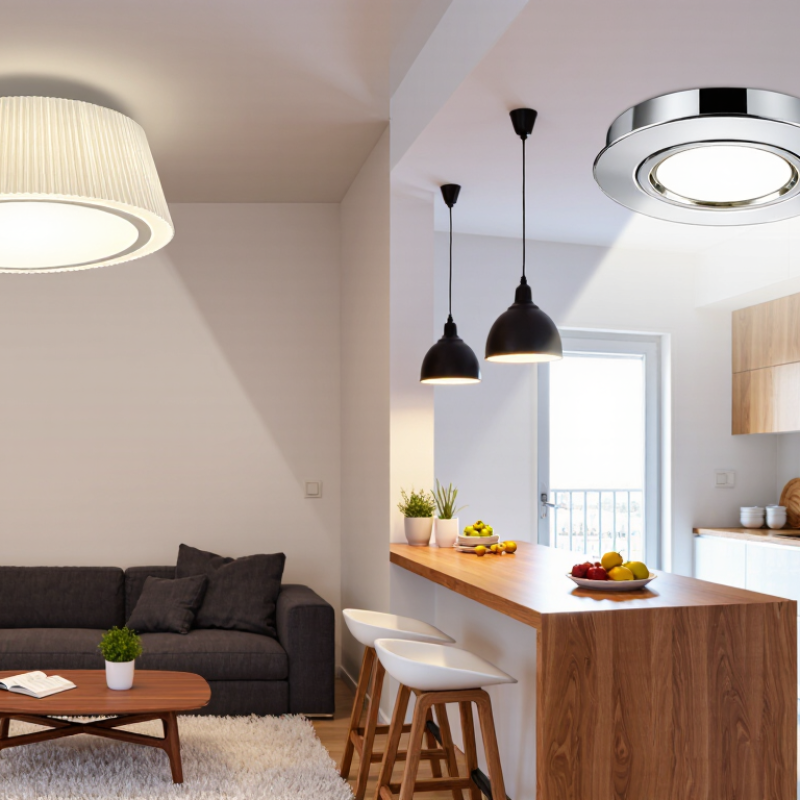
Baffle and reflector trims are two common finishes for recessed lighting. Both hold the lamp and shape its appearance. Their interiors create different visual results.
A baffle trim uses a ribbed, often dark, surface around the lamp. Those grooves absorb some stray light and soften the opening. It can reduce glare over dining tables, sofas, or work areas.
A reflector trim has a smoother, brighter interior. It sends more light downward and makes the aperture look more luminous. The room may feel brighter, but exposed glare can increase at certain viewing angles.
Choose based on comfort and beam performance, not appearance alone. Baffles suit bedrooms, lounges, and screens where visual calm matters. Reflectors can work well in kitchens, corridors, and task areas needing stronger light.
Check the lamp’s beam angle, ceiling height, and trim compatibility. A reflector may brighten a dark ceiling. A baffle may appear too dim with a weak lamp.
Tips: Stand beneath the sample before deciding. Look toward it from the sofa. Also check the trim in daylight and after sunset. I have seen attractive showroom choices feel harsh at home. That small mistake is easy to overlook. Ask for tested photometric data when precise illumination matters. Surface color, lamp position, and ceiling texture can change the result.
Baffle and reflector trims shape light in noticeably different ways. A baffle trim uses deep, usually dark grooves to absorb stray rays. This creates softer brightness and reduces glare near the viewing angle. It suits bedrooms, hospitality spaces, and living rooms with low or medium ceilings. The beam often feels wider, but its edges may look less defined.
A reflector trim works more like a controlled optical surface. Its smooth interior redirects light outward and downward with greater efficiency. The result is a brighter beam, stronger visual contrast, and clearer emphasis on counters, artwork, or displays. In a kitchen, a reflector can place useful light on a worktop. However, poor aiming may create harsh spots on polished surfaces.
I have seen designers choose reflectors for brightness, then discover uncomfortable glare from a nearby sofa. That assumption was too simple. Ceiling height, trim depth, lamp position, wall color, and beam angle all affect the final pattern. A dark baffle may absorb some output, while a pale reflector may increase perceived brightness. Check photometric data when available, then test a sample at night. Even a careful selection can look different beside a white wall or glossy floor. Light distribution is not only a specification; it is a lived visual effect.
Choosing between baffle and reflector trims starts with the room, not the fixture. A baffle trim has a ribbed, darker interior that absorbs stray light and reduces glare. It suits bedrooms, home theaters, and living rooms with screens. In a ten-foot bedroom, a baffle can create softer pools of light above a reading chair. The trade-off is lower perceived brightness.
A reflector trim uses a smoother, brighter surface to direct more light into the room. It works well in kitchens, workshops, and hallways where clear visibility matters. White ceilings can spread reflected light effectively, while dark ceilings may need stronger output. Measure the room before choosing. A narrow beam can leave visible bright spots across a wide countertop.
Your lighting goal should guide the final decision. Choose a baffle when comfort matters more than maximum output. Choose a reflector when you need crisp task lighting or a larger spread. I have seen reflector trims feel harsh over polished tables, especially at eye level. I have also seen baffles look too dim in rooms with dark walls. That mistake is easy to make. Check the trim angle, lamp brightness, ceiling height, and furniture placement together. If glare remains uncertain, test one fixture at night before installing the full layout. An experienced electrician can also verify compatibility, spacing, and safe installation conditions.
| Decision Factor | Baffle Trim | Reflector Trim | Best Choice by Room or Goal |
|---|---|---|---|
| Basic Construction | Uses a ribbed, stepped, or grooved inner surface to absorb and reduce stray light. | Uses a smooth, reflective inner cone or surface to direct more light downward and outward. | Choose based on whether visual comfort or maximum light output is the primary concern. |
| Glare Control | Generally provides better glare control because the dark, textured interior reduces high-angle brightness. | Can produce more visible brightness and glare, especially when viewed from shallow angles. | Baffle: living rooms, bedrooms, media rooms, offices, and spaces with frequent seated viewing. |
| Light Output | May deliver slightly less usable light because the baffle absorbs some light inside the aperture. | Typically offers higher optical efficiency because the smooth surface reflects more light from the lamp or LED source. | Reflector: kitchens, work areas, retail displays, and locations requiring stronger illumination. |
| Beam Appearance | Produces a softer, more comfortable beam with less pronounced brightness at the aperture. | Produces a cleaner, brighter beam that can emphasize surfaces and objects more strongly. | Baffle: relaxed ambient lighting. Reflector: focused task or accent lighting. |
| Ceiling Height | Works well in low- to medium-height ceilings where glare is more noticeable to occupants. | Can be advantageous in medium- to high-ceiling applications where additional punch and throw are needed. | For high ceilings, verify lumen output, beam angle, and mounting depth rather than relying on trim type alone. |
| Recommended Room Types | Bedrooms, family rooms, home theaters, hospitality areas, corridors, and general living spaces. | Kitchens, home offices, workshops, galleries, retail areas, and spaces with detailed visual tasks. | Use the room’s visual activity and occupant comfort requirements as the main selection criteria. |
| Task Lighting | Provides comfortable general illumination but may require closer spacing or higher-output fixtures for demanding tasks. | Usually supports brighter task surfaces when the fixture is correctly positioned and aimed. | Reflector is often preferable over counters, worktables, islands, and display surfaces. |
| Accent Lighting | Creates a softer effect and is less likely to produce a sharply defined highlight. | Better suited to highlighting artwork, merchandise, architectural details, or textured surfaces. | Choose a reflector when emphasis and visual contrast are more important than a soft appearance. |
| Interior Appearance | Has a subdued, architectural appearance that can visually minimize the brightness of the aperture. | Has a brighter, more polished appearance that can make the recessed fixture more noticeable. | Baffle: understated interiors. Reflector: crisp, performance-oriented interiors. |
| Color Options | Dark baffles generally provide stronger glare reduction; light-colored baffles may provide a brighter appearance with less absorption. | Metallic or light-colored reflectors generally maximize reflection and visual brightness. | Select the finish according to the desired balance between visual comfort, efficiency, and ceiling aesthetics. |
| Color Temperature Consideration | Pairs well with warm or neutral-white light when the goal is a comfortable residential atmosphere. | Works well with neutral or cool-white light when clarity and visual detail are priorities. | Typical choices include warm white for relaxation and neutral white for work-focused spaces; the trim does not determine color temperature. |
| Maintenance and Cleaning | Grooves can collect dust and may require more careful cleaning. | Smooth surfaces are generally easier to wipe clean, although reflective finishes can show fingerprints or dust more clearly. | For dusty or frequently cleaned locations, compare the specific surface finish and access conditions. |
| Energy Efficiency | Trim type alone does not determine energy efficiency; LED wattage, delivered lumens, optical design, and controls are more important. | May deliver more light from the same source in some designs, but actual performance depends on the complete fixture. | Compare photometric data, delivered lumens, efficacy, dimming compatibility, and power consumption. |
| Spacing and Layout | Can support comfortable, evenly distributed ambient lighting when fixtures are spaced appropriately. | May require more careful placement to avoid bright spots, scalloping, or excessive contrast. | Use the fixture’s photometric layout, ceiling height, beam angle, and target illuminance to determine spacing. |
| Best Overall Use | Choose when glare reduction, visual comfort, and a softer residential appearance are the main goals. | Choose when stronger output, directional control, task illumination, or accent emphasis is more important. | When priorities are equal, a baffle is often the safer choice for occupied spaces, while a reflector suits performance-focused lighting. |
Selection note: Baffle and reflector trims are only part of a recessed lighting system. Before purchasing, confirm the fixture’s aperture size, housing compatibility, ceiling insulation rating, wet-location rating where applicable, lumen output, beam angle, color rendering, dimmer compatibility, and photometric data.
How to Choose Between Baffle and Reflector Trims?
Choosing between baffle and reflector trims requires more than comparing advertised brightness. In real rooms, glare control often determines whether people feel comfortable after several hours. Baffle trims use darker, recessed surfaces to reduce the direct view of the light source. They usually create softer contrast, especially above desks, sofas, and kitchen islands. The trade-off is lower perceived brightness. Some light gets absorbed.
Reflector trims direct more light from the aperture, so they can make ceilings and work surfaces appear brighter. Their smooth interior supports stronger light distribution and cleaner efficiency. However, a shiny reflector may expose a harsh bright spot at certain viewing angles. That effect becomes noticeable on glossy tables, computer screens, and polished floors. Too much brightness is still uncomfortable.
I normally compare both options at the intended mounting height, not in a showroom. Check beam spread, lumen output, color temperature, and glare data when available. Observe the fixture from seated and standing positions. Short visits can mislead. A reflector may look impressive for ten minutes, yet feel tiring later. A baffle may seem slightly dim at first, but provide steadier visual comfort throughout the day. Room color also matters; dark ceilings can absorb light and change the balance. There is no universal winner. Use measured performance, realistic sightlines, and honest observation before deciding.
Comparing glare control, brightness, and visual comfort
Baffle trims generally provide stronger glare control and visual comfort because their deep, darkened surfaces reduce direct line-of-sight brightness. Reflector trims usually deliver higher light output and a wider, more efficient distribution, making them suitable when maximum brightness is the priority. The scores use a 1–10 design comparison scale, where higher values indicate stronger performance for each criterion.
Baffle trims use a ribbed inner surface to soften glare and create a calmer ceiling appearance. Reflector trims use a smoother interior to direct more light downward. In a kitchen, a reflector may brighten a worktop effectively. In a bedroom, a baffle often feels more comfortable. The choice depends on both visual comfort and lighting purpose.
Trim size changes how the fixture sits within the ceiling. Measure the housing opening, not only the visible hole. A trim that is too small can leave an uneven gap around the edge. A larger trim may cover old marks, but it can look heavy in a narrow ceiling panel. Check the ceiling thickness and the housing depth before ordering. Small differences matter.
Finish affects glare, dust, and the room’s character. Matte black can frame the light clearly, while white usually blends into a pale ceiling. Brushed metal adds texture but may reveal fingerprints. I once chose a bright finish for a low ceiling and found the reflections distracting at night. That mistake changed my preference for softer surfaces.
Compatibility requires careful checking. Confirm the trim’s diameter, mounting method, lamp type, and adjustment range. Also verify whether the housing supports insulation contact or damp locations. Product specifications are more reliable than appearance alone. If the fit feels forced, stop there. A qualified electrician can inspect uncertain wiring and mounting conditions before installation.
Baffle trims have ribbed, darker interiors that absorb stray light and reduce glare. Reflector trims have smooth surfaces that direct more light downward. One feels softer. The other looks brighter.
A baffle trim usually suits bedrooms because it creates gentler light. Above a reading chair, it can form a soft pool of illumination. Perceived brightness may be lower.
Choose a reflector trim for kitchens, workshops, and hallways needing clear task lighting. It can brighten a countertop effectively. Narrow beams may create bright spots.
White ceilings can spread reflected light across the room. Dark ceilings may require stronger output. A reflector can still feel harsh against polished surfaces.
Measure the housing opening, not only the visible ceiling hole. A small trim may leave an uneven gap. A large trim can look heavy on a narrow panel.
White finishes usually blend with pale ceilings. Matte black creates a stronger visual frame. Brushed metal adds texture but can reveal fingerprints. I once chose a bright finish for a low ceiling. Night reflections bothered me.
Confirm the trim diameter, mounting method, lamp type, and adjustment range. Check ceiling thickness and housing depth. Also verify insulation-contact and damp-location support.
Install or test one fixture at night before planning the complete layout. Check glare, brightness, ceiling height, and furniture placement together. If the result feels uncertain, pause. A qualified electrician can verify spacing, wiring, and mounting conditions.
Choosing the right recessed-lighting trim begins with understanding the difference between baffle and reflector trims. Baffle trims use a ribbed or stepped interior to absorb and soften stray light, helping reduce glare and create a comfortable, relaxed atmosphere. Reflector trims have a smoother, more reflective surface that directs more light downward, producing a brighter and more focused effect. Learning how to choose between baffle and reflector trims depends on the room’s purpose, desired brightness, ceiling height, and overall design.
When comparing options, consider visual comfort, light distribution, and the way each trim affects the room’s mood. Baffle trims may suit bedrooms, living areas, and media spaces, while reflector trims can work well in kitchens, work areas, and locations requiring stronger illumination. Trim size, finish, bulb or module compatibility, housing dimensions, and installation requirements should also be checked carefully. A balanced choice will provide the right level of brightness while complementing the ceiling and supporting the room’s everyday function.
Jable Light