How many lumens do i need for kitchen track lighting? The honest answer depends on the room, ceiling height, surface colors, and where the heads point. Lumens describe light leaving a source; they do not tell you exactly how bright the countertop will look. That distinction matters. The Illuminating Engineering Society’s Lighting Handbook evaluates lighting by illuminance on the task surface, not by bulb output alone. In practical terms, a bright track head aimed at a glossy backsplash may create glare while leaving the chopping board dim.
Lighting researcher Mark Rea’s work at the Lighting Research Center supports a useful principle: design light around the visual task and the person using the space. Put another way, prioritize useful light on counters, sinks, and cooking zones—not a large lumen total on the box. The U.S. Department of Energy’s Energy Saver guidance also notes that LED lighting can use at least 75% less energy than incandescent lighting, making efficient, layered lighting practical. Still, energy savings do not guarantee good placement. A narrow beam can leave dark gaps between track heads.
For a starting estimate, calculate the kitchen’s area and consider the task lighting each work zone needs. Then check the fixture’s beam angle, dimming range, and manufacturer’s delivered-light data. Track lighting is adjustable, but it is not magic. I would test the layout after dark, when daylight cannot disguise shadows, and adjust the heads before settling on a final lumen target.
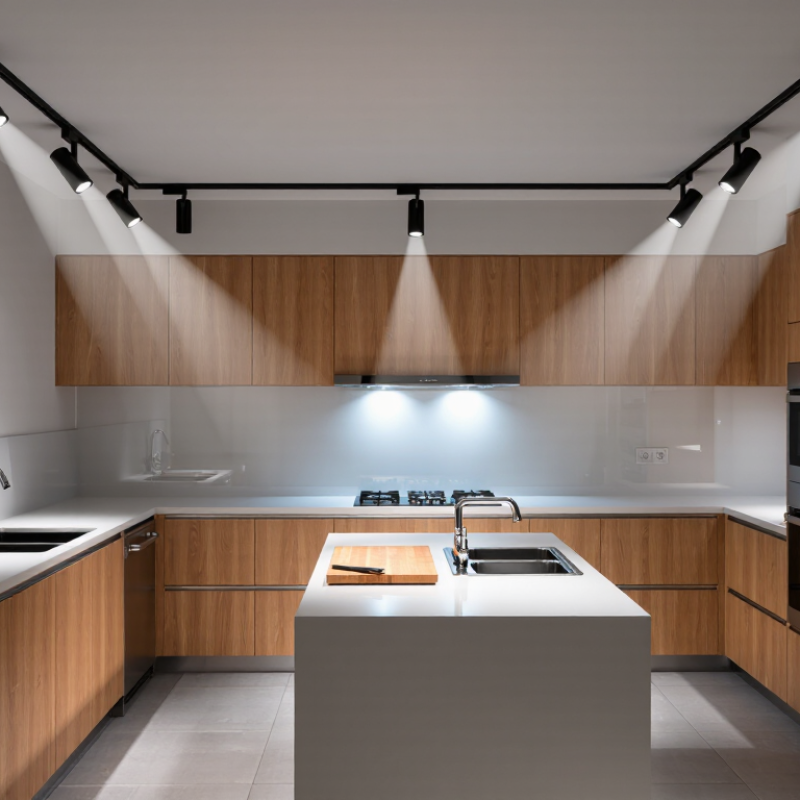
What Lumens Measure in Kitchen Track Lighting
In kitchen track lighting, lumens measure the total visible light a lamp emits—not the electricity it uses or how bright every counter will feel. The U.S. Department of Energy’s Energy Saver guidance uses about 800 lumens as the light output of a traditional 60-watt incandescent bulb. That figure offers a useful reference point, not a universal kitchen target. One track head aimed at a pale backsplash can appear much brighter than the same output directed onto a dark countertop.
Placement matters. Illuminance, measured in lux or foot-candles, describes how much light reaches a surface; lumens describe the source’s output. The Illuminating Engineering Society’s residential lighting guidance treats kitchen task areas separately from general room lighting, because chopping vegetables needs more focused light than walking through the room. A practical check: stand at the counter and look for shadows from your head or cabinets. A high lumen rating cannot fix poor aiming.
More light is not always better. Several high-output heads can create glare on glossy tile, while dimmer, well-directed beams may make food preparation easier. Beam angle, mounting height, lens diffusion, and surface color all affect the result. I would compare lumen ratings alongside these details, then test the track with the actual counter and finishes. Labels help, but real kitchens can still surprise you.
How Kitchen Tasks Determine Brightness Needs
Why Are Lumens Important for Kitchen Track Lighting?
How Kitchen Tasks Determine Brightness Needs
Kitchen brightness depends on the work, not just the room size. Chopping vegetables, reading a recipe, and checking whether chicken is cooked each need clear, comfortable light. The Illuminating Engineering Society’s Lighting Handbook uses illuminance to assess visual tasks; about 50 foot-candles is a commonly used target for kitchen counters. That equals roughly 50 lumens reaching each square foot, not the total output required from a track head. Shadows matter, too.
The U.S. Department of Energy’s Energy Saver guidance explains that lumens measure light output. For track lighting, spread that output across the areas where hands and tools move. A counter beneath dark cabinets may need a brighter, focused head than a pale island with light bouncing off its surface. Aim adjustable heads toward the worktop, not directly into your eyes. Small detail, big difference.
Choose brightness by task. A sink used for rinsing greens needs enough light to spot grit; a dining nook usually feels better with less. Dimmers help when one kitchen serves both jobs. I’ve found that a single bright track can still leave a knife shadow across the cutting board. IES targets are useful starting points, but room finishes, fixture spacing, and personal vision change the result. Measure at the counter if possible, then adjust.
How Track Light Placement Affects Light Distribution
Lumens describe how much light a track fixture produces, but placement determines where that light goes. In a kitchen, a bright beam aimed at the wrong spot can leave a cutting board dim. Think in work zones: counters, the sink, and the island each need light that reaches the surface, not just the floor.
Mounting a track near the center of the ceiling may seem tidy, yet it can put your body between the light and the counter. Aim adjustable heads toward the worktop from an angle, so hands and utensils cast fewer shadows. Keep beams from pointing directly into seated diners’ eyes. Shadows matter. The beam spread matters, too: narrow beams create bright pools, while wider beams blend more evenly but may feel less focused.
A useful starting point is to position heads over key tasks, then check the kitchen after dark. Move a head slightly and notice whether the sink edge or a counter corner changes. Pale walls can bounce light around; dark cabinets absorb more of it. Even a careful layout may leave one awkward patch. That is a reason to test and adjust, not simply add more lumens.
Why Are Lumens Important for Kitchen Track Lighting? — How Track Light Placement Affects Light Distribution
| Kitchen Area |
Suggested Illuminance at the Surface |
Example Area and Target |
Approximate Track-Light Output |
Placement and Distribution Guidance |
| General circulation |
100–200 lux (about 9–19 foot-candles) |
8 m² at 150 lux |
About 2,400 lumens total for the example area |
Space heads to create overlapping pools of light and reduce dark gaps. Aim some heads toward vertical surfaces to help the room feel more evenly lit. |
| Countertop work surface |
300–500 lux (about 28–46 foot-candles) |
2.4 m² at 400 lux |
About 1,920 lumens total for the example area |
Position heads in front of the user’s standing position and aim them at the worktop. This helps limit shadows cast by the user onto the counter. |
| Kitchen island |
300–500 lux (about 28–46 foot-candles) |
1.5 m² at 400 lux |
About 1,200 lumens total for the example area |
Use several evenly spaced heads when needed, rather than one concentrated beam. Aim for overlapping light across the island surface without directing glare into seated eye lines. |
| Sink and food-preparation area |
300–500 lux (about 28–46 foot-candles) |
0.8 m² at 500 lux |
About 800 lumens total for the example area |
Aim a head at the sink and adjacent work area from a position that avoids placing the user between the light and the task. Check for shadows from cabinets or the user. |
| Pantry or storage counter |
200–300 lux (about 19–28 foot-candles) |
1.2 m² at 250 lux |
About 600 lumens total for the example area |
Direct light toward shelves or the storage surface. A wider beam can improve coverage across shelving, while careful aiming can reduce shadows between shelves. |
| Beam spread example |
Coverage depends on beam angle and distance |
Head positioned 1.2 m above the surface |
Approximate beam diameter: 0.51 m at 24°, 0.78 m at 36°, and 1.39 m at 60° |
A narrower beam concentrates light in a smaller area; a wider beam covers more area but may provide lower illuminance at the surface. Overlap beams where uniform task lighting is needed. |
|
Planning note: Lux measures light reaching a surface; lumens measure light emitted by a source. Example output estimates assume about 50% of emitted lumens reach the working area, so they are starting points rather than guaranteed results. Actual illuminance varies with fixture optics, beam angle, mounting height, surface reflectance, room layout, and head direction. Verify the final layout on site where precise lighting levels matter.
|
How to Choose Lumens for Different Kitchen Zones
Choosing lumens for kitchen track lighting starts with the job each zone needs to do. For general room light, plan roughly 30–40 lumens per square foot as a starting point. A 100-square-foot kitchen might need around 3,000–4,000 lumens overall. Treat this as a guide, not a fixed rule; pale walls reflect more light than dark cabinets.
Countertops need brighter, more focused light. Aim for roughly 50–75 lumens per square foot over active prep areas, using adjustable heads to direct light onto the work surface. A narrow beam can create bright spots and deep shadows, so wider beams often feel more even. Keep fixtures positioned to limit glare from glossy counters. Small changes matter.
For a sink or stove, use enough output to see clearly without shining light into your eyes. Dining corners and open shelves usually need less; a softer beam can add depth without overpowering the room. Check the kitchen at night, with under-cabinet lights on or off, since other fixtures change how track lighting feels. It is easy to overestimate lumens on paper. Adjust the aim, then reassess the actual work surface.
How to Balance Brightness, Glare, and Energy Use
In a kitchen, lumens describe how much visible light a track fixture produces; they do not show where that light lands. A bright head aimed at glossy tile can feel harsher than a softer beam directed onto a chopping board. Start with the task: counters need clear, even light, while a breakfast nook can be gentler. No single lumen number suits every kitchen. Room size, ceiling height, surface color, and daylight all affect the result.
Spread light across work zones instead of pointing several bright heads at one spot. Aim adjustable fixtures slightly forward of the counter edge to reduce shadows from your body. Then test the setup after dark. Check the sink, cutting area, and reflective backsplash from standing eye level. Squinting, sharp reflections, or dark gaps suggest that a head needs repositioning or dimming. Small changes matter.
Dimming can balance comfort and energy use: lower the output when full brightness is unnecessary, especially in the evening. Choose efficient LED fixtures, and compare lumens with watts; watts measure power, not brightness. Check that the dimmer is compatible with the fixture. I would not chase the highest lumen rating. It can make a compact kitchen uncomfortable, and track heads may still leave uneven patches. Worth checking.
Conclusion
Lumens measure the amount of visible light a kitchen track-lighting system produces, so they offer a useful starting point for planning brightness. The right level depends on what happens in each area: food preparation and cooking need clear, focused light, while dining or gathering spaces often feel more comfortable with softer illumination. When considering how many lumens do i need for kitchen track lighting, think about the room’s size, ceiling height, surface colors, and the tasks performed beneath each fixture rather than choosing a single number for every kitchen.
Track placement also affects how effectively those lumens are distributed. Aim adjustable heads toward counters and work areas, and arrange them to reduce dark patches and harsh shadows. Different zones may benefit from different brightness levels, with stronger task lighting balanced by gentler ambient light. Dimming controls can help adapt the room throughout the day, manage glare, and avoid using more energy than necessary.

 Jable Light